


 Tel : +86-592-3926659
 Email : gilia@inthelaboratory.com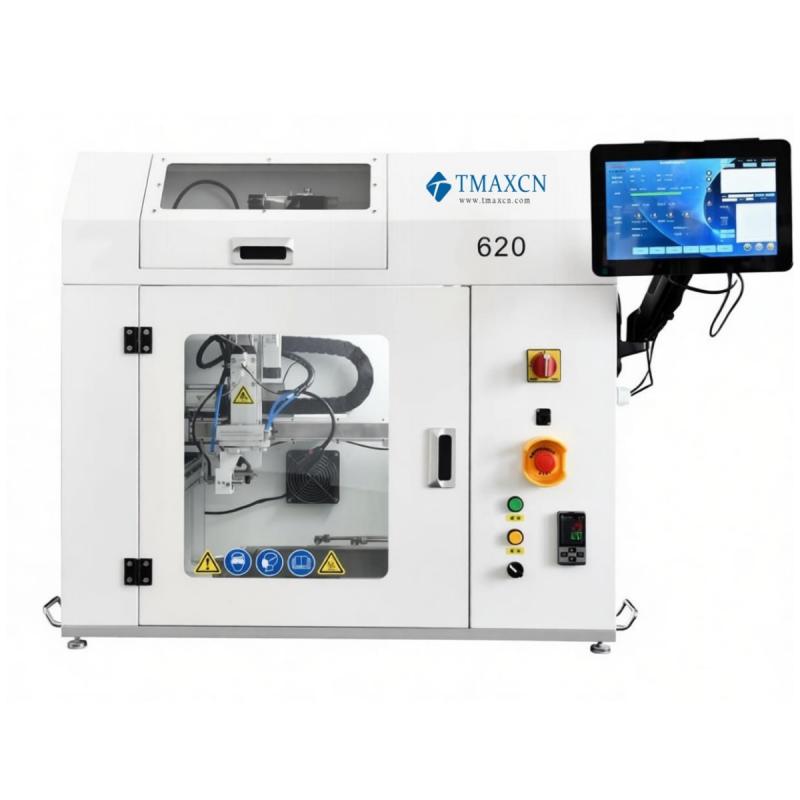
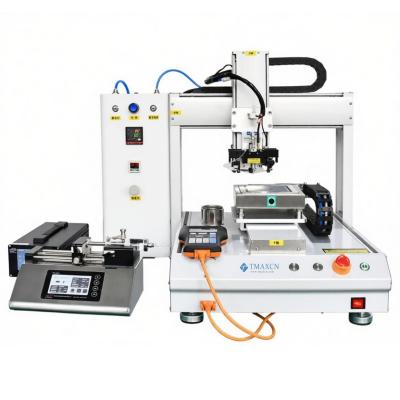
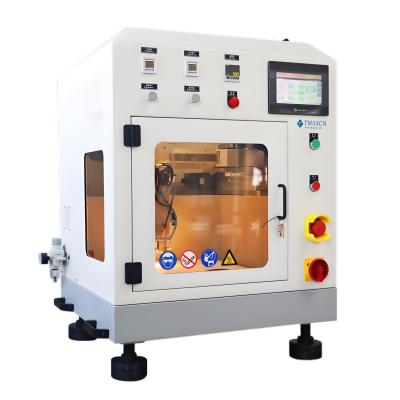
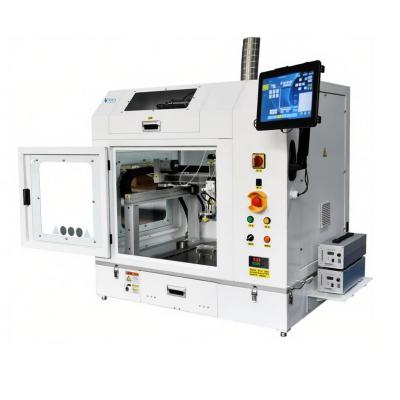
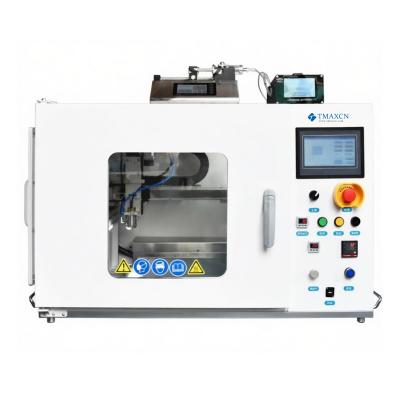
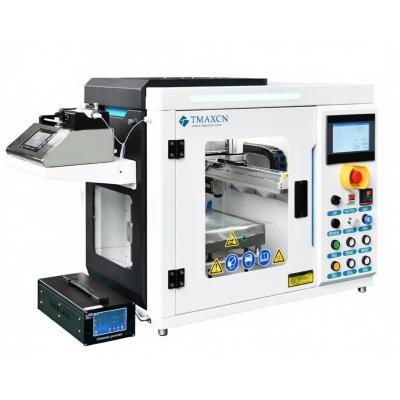
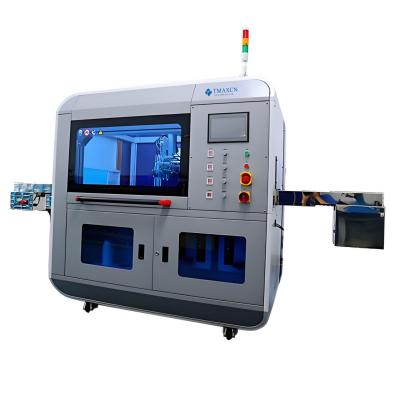
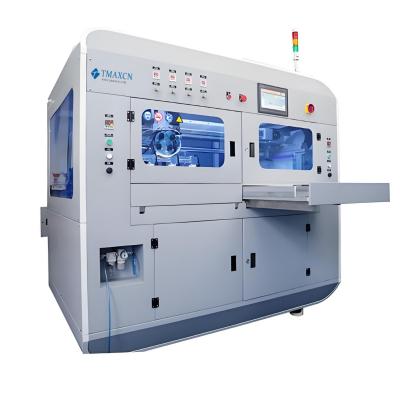
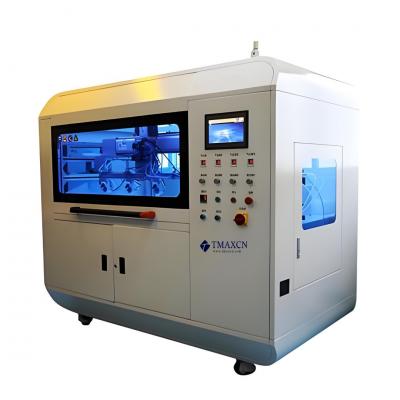
Intelligent Ultrasonic Spray Nozzle Pyrolysis Coating Machine System
Model: Lith-FS03I-Intelligent Ultrasonic Spray Coater
1. Introduction
Ultrasonic spraying is a unique spray technology based on ultrasonic atomization nozzle technology. The sprayed material is initially in a liquid state (solution, sol, suspension, etc.), which is atomized into fine particles by an ultrasonic atomization device and uniformly coated onto the substrate surface with a carrier gas to form a thin film or coating.
Advantages over Traditional Spraying:
· Superior uniformity
· Thinner coating thickness
· Higher precision
· Reduced paint splashing
· Material utilization rate is over 4x higher than traditional methods
Applications: Qualitative experiments in scientific research laboratories, small-scale production, and thin-film fabrication.
2. Principle
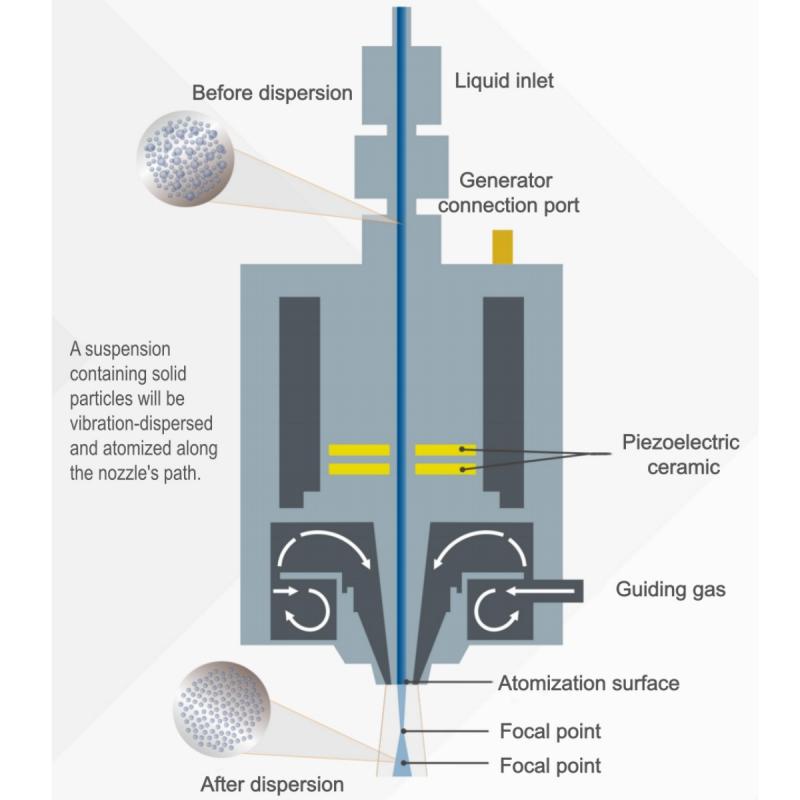
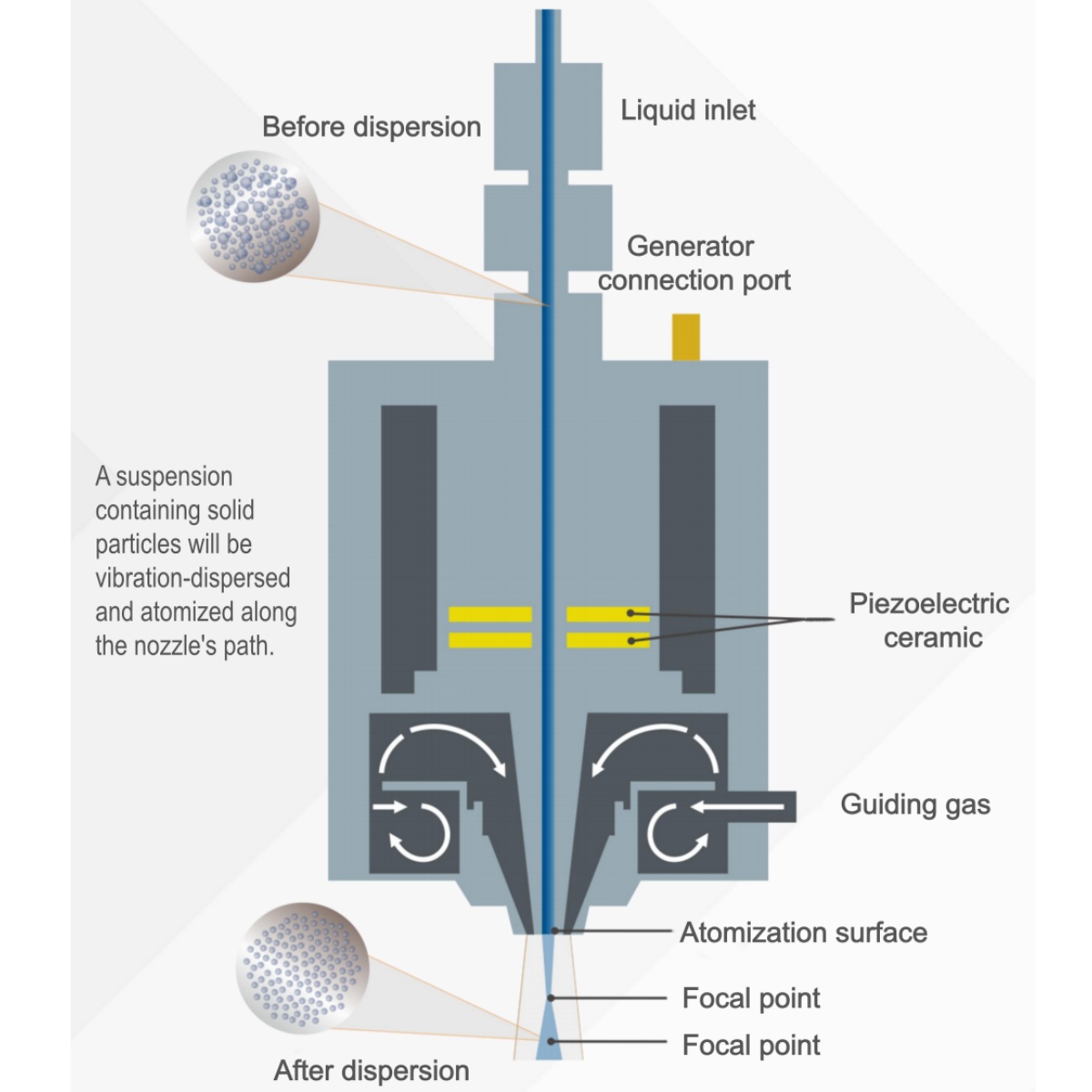
The ultrasonic nozzle converts electrical energy into high-frequency mechanical energy via the piezoelectric effect, creating a standing wave that atomizes the liquid into uniform micron-sized droplets.
Key Features:
· Precise control of droplet size and distribution
· Rapid evaporation for high-surface-area particles and thin-film coatings
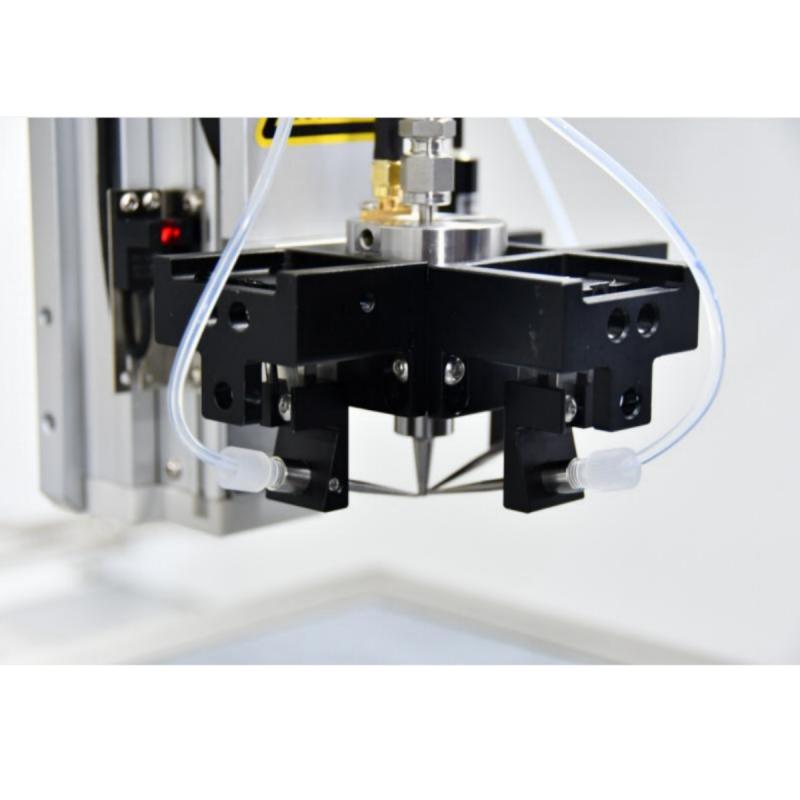
3. Structure and Power Control of Ultrasonic Atomization Nozzle
Structure:
· Nozzle body: Titanium (excellent acoustic properties, high tensile strength, corrosion resistance)
· Protective casing: 304 stainless steel (titanium optional)
Power Control:
· Vibration amplitude must be carefully controlled:
o Too low: Insufficient energy for atomization
o Too high: Liquid is torn and ejected unevenly
· Optimal input power: 1–15 watts
4. Droplet Size Distribution and Flow Rate
Droplet Size:
· Determined by nozzle frequency, liquid surface tension, and density (frequency is primary factor).
· Higher frequency → Smaller median droplet diameter.
· Distribution follows a normal curve (median, number-average, and volume-average diameters).
Flow Rate:
· Depends on liquid arrival speed (not pressure).
· Adjustment ratios:
o Large apertures: 5:1
o Small apertures: 10:1
5. Advantages
· High Stability: Titanium alloy and stainless steel construction; no wear, clogging, or noise.
· Material Saving: Minimal splashing; paint utilization >4x traditional methods.
· High Controllability: Precise flow rate and spray pattern control.
· Easy Maintenance: Self-cleaning; no moving parts or cooling required.
· Wide Applications: Fuel cells, solar cells, glass coatings, electronic circuits, chemical liquids, etc.
6. Parameters
|
Parameter |
Specification |
Parameter |
Specification |
|
Product Type |
TMAX-FS03I |
Motion System |
XYZ three-axis, programmable (300×300 mm, max 400×400 mm) |
|
Nozzle Frequency |
20–200 kHz |
Control Method |
PLC with touch screen and buttons |
|
Nozzle Power |
10–100 W |
Control Content |
Ultrasonic spraying, liquid supply, heating, ultrasonic dispersion |
|
Max Continuous Spray Rate |
20–1200 ml/h/pcs (expandable) |
Liquid Supply Method |
Precision syringe pump |
|
Effective Spray Width |
2–260 mm/pcs (expandable) |
Ultrasonic Dispersion (Optional) |
50 ml, 40 kHz, bio-grade sampler |
|
Spray Uniformity |
<5% |
Dispersion System Power |
200 W |
|
Solution Conversion Rate |
≥95% |
Heating/Drying (Optional) |
Up to 200°C |
|
Dry Film Thickness |
20 nm–100 μm |
Vacuum Adsorption (Optional) |
Multi-zone, with vacuum generator |
|
Solution Viscosity |
≤50 cps |
Ultrasonic Generator |
Fully digital, intelligent frequency tracking |
|
Temperature Range |
1–60°C |
Exhaust Vent |
Included |
|
Atomized Particle Size (Median) |
10–45 μm (distilled water, frequency-dependent) |
Total Weight |
~180 kg |
|
Max Carrier Gas Pressure |
≤0.15 MPa |
Accessory Material |
Sheet metal, powder-coated |
|
Input Voltage |
220 V ±10%, 50–60 Hz |
Nozzle Core Material |
Piezoelectric ceramic, titanium alloy |




 IPv6 network supported