Xiamen Lith Machine Limited is a technology-based enterprise, integrating R&D, manufacturing, sales and service. Our company has strong scientific research strength, including more than 20 senior mechanical and electrical engineers, 8 external experts and professors, and more than 160 front-line technical workers.
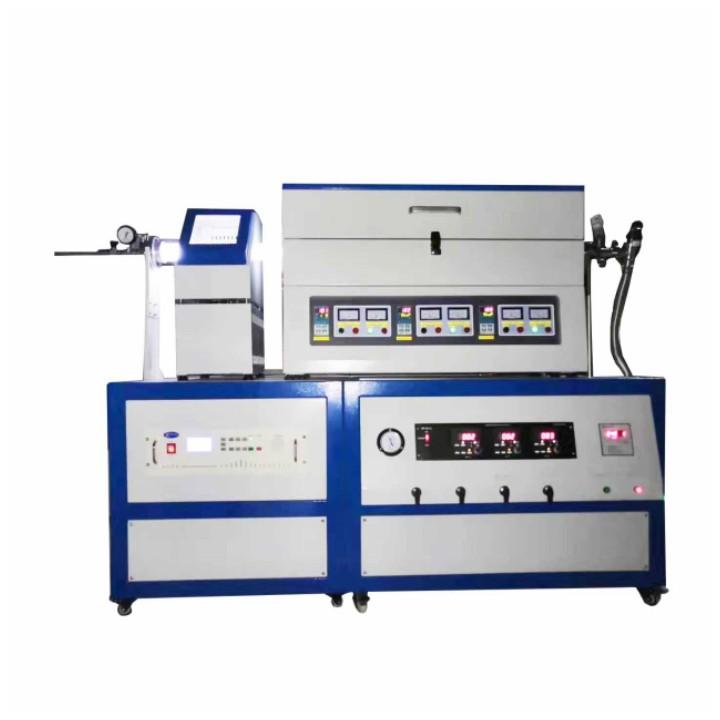
A Microwave fluidized bed furnacee is a highly advanced thermal processing system that integrates microwave heating with fluidized bed technology to achieve superior temperature uniformity, rapid heat transfer, and efficient mass flow of powders and granular materials. This innovative equipment is widely utilized in chemical engineering, metallurgy, pharmaceuticals, catalysts, and newenergy materials production. Its combination of volumetric microwave heating and dynamic material fluidization provides unmatched performance in drying, calcination, coating, pyrolysis, and thermal treatment of sensitive or finely dispersed materials.
1. Working Principle of Microwave Fluidized Bed Furnacee
The Microwave fluidized bed furnacee functions by directing microwaves into a chamber where solid particles are suspended by an upward flow of gas, creating a fluidlike motion. The particles behave as if they are in a boiling liquid, achieving intense mixing and excellent gas–solid contact.
Microwaves penetrate the fluidized material bed, heating the particles internally through dipole rotation and ionic conduction. This unique mechanism produces several advantages:
* Volumetric heating, where particles heat from within * Elimination of thermal gradients * Rapid drying or reaction rates * Highly uniform temperature distribution
The combined effect of fluidization and microwave heating dramatically enhances heat and mass transfer efficiency, making the furnace ideal for fast and precise thermal processes.
Main structural components include:
* Microwave generators (2.45 GHz or 915 MHz) * Microwave chamber with shielding and waveguides * Gas distributor plate for fluidization * Quartz or ceramic processing column * Temperature and power control system * Cyclone separator or filter for powder recovery * Gas flow and atmosphere control system
This configuration enables continuous processing while maintaining excellent product uniformity and energy efficiency.
2. Engineering Features and Advantages
Superior Heat Transfer Efficiency
The fluidized state increases particle–gas contact area while microwaves provide volumetric heating. Together, these mechanisms ensure extremely fast thermal responses.
Highly Uniform Temperature Distribution
Constant particle mixing prevents hot spots, while microwave penetration ensures even heating throughout the entire material bed.
Enhanced Reaction and Drying Rate
Materials dry or react much faster than in traditional hotair or resistance furnaces due to:
* Direct microwave absorption * Internal moisture migration * Accelerated mass transfer
This is especially beneficial for fine powders, granules, and moisturesensitive materials.
Low Energy Consumption
Microwave energy heats the product directly instead of heating the surrounding air or furnace walls. Energy savings often reach 30–60%.
Controlled Atmosphere Flexibility
The furnacee allows a wide range of processing atmospheres:
* Inert gas (N₂, Ar) * Reducing gas (H₂ or forming gas) * Oxidizing gas (O₂, air) * Steam or reactive gases
This makes it suitable for chemical reactions, reduction processes, and sensitive material preparation.
Scalable and Continuous Operation
The system can be designed for batch or continuous fluidization, supporting production from laboratory scale to industrial output.
Reduced Thermal Degradation
Microwave heating minimizes overheating of surfaces, protecting temperaturesensitive products such as pharmaceuticals, catalysts, or coated materials.
3. Industrial Applications of Microwave Fluidized Bed Furnacee
Thanks to its dynamic and efficient thermal characteristics, the Microwave fluidized bed furnacee is used across many hightech and industrial sectors.
Chemical and Catalyst Production
Ideal for:
* Calcining catalyst powders * Drying catalyst carriers * Coating active materials onto substrates * Activating metal oxides or porous materials
Microwave heating often improves pore structure and reaction uniformity.
Microwave fluidization prevents degradation and preserves material properties.
4. Customization and Technical Options
Manufacturers typically offer a range of customizable features based on user requirements:
Furnace Column Materials
* Quartz * Highpurity ceramics * Polymers for lowtemperature applications
Microwave Power and Frequency Options
Selectable to match penetration depth and heating uniformity.
Gas Flow and Distribution Systems
Advanced distributor plates ensure stable and uniform fluidization.
Integrated Powder Handling
Includes cyclone separators, filters, and automated feeders.
Temperature and Power Control
PLCbased systems provide precise regulation and repeatable process curves.
MultiZone Heating
Allows staged heating profiles for complex reactions.
5. Conclusion
The Microwave fluidized bed furnacee represents a major technological advancement in thermal processing, offering unmatched heating uniformity, rapid temperature control, and highefficiency material handling. Its ability to combine microwave volumetric heating with fluidized bed dynamics makes it a powerful solution for industries that demand precision, speed, and energy savings. Whether applied to chemicals, catalysts, energy storage materials, or environmental treatment, this equipment ensures superior performance and consistent product quality. For laboratories and manufacturers striving for nextgeneration processing capabilities, the microwave fluidized bed furnacee is a highly valuable and forwardlooking investment.

 IPv6 network supported


 Tel : +86-592-3926659
 Email : gilia@inthelaboratory.com